
Rediscovering Us: Rebuilding Intimacy After Baby

Let’s be honest: bringing a tiny human into the world is a wild, beautiful, sleep-depriving, love-exploding ride. One minute you're marveling at your baby’s fingers, the next you’re wondering when you last had a real conversation with your partner—or, you know, a shower. If your relationship feels a little... off since the baby arrived, you’re not alone.
You’re not broken.
You’re just adjusting to one of life’s biggest transitions. Rebuilding intimacy after a baby isn’t about snapping back to “how things were.” It’s about gently finding your way forward—together.
Let’s walk through it, one step at a time—oh & if you haven’t already - make sure to grab our free guide “5 Essential Tips for New Parents” to help you navigate the fourth trimester.
What Changes After Baby (Besides Everything)
Your sleep schedule, your priorities, your body, your to-do list—everything shifts. The two of you go from couple to co-parents overnight, and suddenly, your sweet, snuggly Netflix partner is now also your diaper-tag team. You might feel more like roommates than romantic partners some days—and that’s totally normal. This phase is tough, but it’s also temporary. Acknowledging the shift is the first step toward reconnecting.
Physical Changes: Let’s Talk About the (Other) Body Stuff
Childbirth is a big deal—emotionally, hormonally, and physically. Whether you had a vaginal birth, abdominal birth, or anything in between, healing takes time. Like, real time.
Some things that might be happening:
Physical healing (Including Scar Tissue)
Whether you had a vaginal birth, a cesarean birth, or any type of intervention, your body needs time to heal—and that includes addressing scar tissue. Scar tissue (external or internal) can cause tightness, discomfort, or even pain during intimacy. It’s okay to go slow, use support tools (like pelvic floor therapy or lubricants), and check in with your provider if something doesn’t feel right. Healing isn’t just about time—it’s about tuning in to what your body needs now, not what it “should” be doing.
Hormones doing the cha-cha
Your body is flooded with hormones like oxytocin (the “bonding hormone”), which can create beautiful moments of closeness with baby—but might make you feel emotionally maxed out by the end of the day. On top of that, your estrogen and progesterone levels drop dramatically after birth, which can affect your mood, energy, and libido. Basically, your internal chemistry is doing a full-on remix.
A very tired body (and brain)
Recovery from birth, lack of sleep, and round-the-clock caregiving is no small thing. Your muscles ache, your brain is foggy, and even basic self-care can feel like climbing a mountain. It’s hard to feel flirty or connected when your main fantasy is eight (ha more like five) hours of uninterrupted sleep.
If uninterrupted sleep sounds like an impossible dream, remember Bridgetown Baby Doulas are here to support - night-time visits can give you and your family the respite you need to face the days with a little more spring in your step. Email us at care@bridgetownbaby.com today to find out how.
Feeling disconnected from your body or not “in the mood” at all
After giving birth, your body can feel unfamiliar—like it’s been through a transformation you didn’t fully sign up for. You might feel sore, self-conscious, or simply “touched out” from holding a baby all day. Your desire for physical intimacy may take a backseat, and that’s okay. It doesn’t mean anything’s wrong—it just means your body and brain need time to recalibrate.
Fun fact (that’s not so fun)
Thanks to prolactin—the hormone your body produces to support breastfeeding—you might experience vaginal dryness too. Yep, while your body is busy making milk, it also dials down estrogen levels, which can leave things feeling a little less… lubricated. Totally normal, totally fixable (hello, lube!), and definitely not a reflection of your desire or connection. Mother Nature: amazing at making babies, a little less smooth when it comes to postpartum romance.
This is why support is so important during the fourth trimester. Not only are you looking after a tiny (very demanding) human, you’re doing so whilst recovering from the equivalent of nature’s finest ultra-marathon. Bridgetown Baby Postpartum doulas are here to support you and your family so you can take the time you need to recover (think sleep, a shower, a hot meal, or even all three!)
Book a no-obligation call here to find out more - we’d love to meet you.
Emotional Changes after Baby: It’s Not Just You
Becoming a parent can bring up all the feelings—joy, fear, love, guilt, overwhelm, repeat. Both partners go through emotional shifts, even if they look different.
You might feel:
Anxious, weepy, or like you're on a constant loop of “Am I doing this right?”
One minute you’re snuggling your baby, crying tears of pure love, and the next you’re in full meltdown mode because the bottle warmer beeped… weird. Suddenly, everything feels like it has life-or-death stakes—from how you swaddle to whether the baby blinked too fast. It’s like being thrown into a high-stakes parenting pop quiz, except no one gave you the study guide, and the questions keep changing.
Like your brain has turned to oatmeal (hello, baby fog)
Can’t remember what day it is? Lost your phone, your coffee, and your sanity in the same hour? Yep, baby brain is real. It’s like your short-term memory ran off with your last clean pair of socks.
Don’t worry—clarity returns… slowly, and usually after a nap (or three or a hundred).
And here’s the wild part: that intense hyper-awareness? That emotional rollercoaster? The “mommy brain”? It’s not just you losing it—it’s your brain literally rewiring itself to focus on your baby’s survival and wellbeing. Your instincts are on high alert, your sensitivity is dialed up to 100, and it’s all part of the incredible feat of becoming a parent.
Adjusting Expectations (Hint: Lower Them. No, Lower.)
Let’s be real—parenthood rarely looks like the filtered version on Instagram. You may have pictured cozy family dinners, folded laundry, and a peacefully sleeping baby by 7 p.m. In reality? Someone’s crying (possibly you), you’re eating toast over the sink, you haven’t slept in the same bed as your partner for weeks and there’s a diaper somewhere that no one remembers changing.
Now’s the time to adjust those expectations, together—not out of failure, but out of love and realism. Here’s how:
Be specific
Vague cries for help often go unheard—not out of neglect, but because your partner might not know how to step in. Instead of “I need help,” try, “Could you take the baby for 15 minutes so I can shower (and maybe stare at a wall in peace)?” Clear, direct requests take the guesswork out of caregiving and make both of you feel more like teammates.
Make a Plan
Parenting is a team effort, but without a clear playbook, it can feel like you’re both running in different directions. Set aside time to make a plan together for when and how each of you will step in—whether it’s for nighttime feedings, taking turns on baby duty, or handling household chores. This way, you both know what to expect, and no one’s left guessing who’s doing what. A little planning can help prevent misunderstandings and make it easier to support each other when things get hectic.
Let go of the scoreboard
Keeping score—who changed more diapers, who slept less, who did the dishes—is a fast track to resentment. This isn’t a competition, it’s a collaboration. Some days one of you carries more. Other days, you switch. It's not about even splits, it's about shared support. Think of it this way: if the house is still standing and the baby is fed (and hopefully a little happy), you’re already winning. Extra credit if you both managed to grab a snack in the chaos!
And remember - you’re not in it alone! Bridgetown Baby postpartum doulas are here to support. (We’ve got 10+ years of experience & are proudly voted the Best Postpartum Doulas in Portland!)
Book a call to chat with our wonderful team here, or drop us a quick email and we’ll happily answer any questions you might have.
Communication: Keeping It Simple and Sweet
After baby, the last thing you want is a big, dramatic heart-to-heart every night (I’m exhausted just typing it). Sometimes, it’s the small check-ins that matter most. A simple, “Hey, how’s your heart today?” can open up a world of connection, even on the toughest days. Or you might let your partner know, “I’m so grateful you gave me some time to take a shower.” These little moments of acknowledgment go a long way in reinforcing that you see each other, even when things feel chaotic.
Here are a few gentle reminders to keep things flowing:
Use “I” statements, not “You always…”
“I feel overwhelmed when I have to do everything myself” is way more effective (and less accusatory) than “You never help!” The goal is understanding, not scoring points.
Be kind.
Tiredness has a way of making words sharper than we mean them to be. For instance, imagine it’s late, and you’ve both had a long day. One of you accidentally spills water all over the counter, and the other mutters, “Seriously? Again?” It’s easy to snap when you’re running on empty, but that moment is a perfect opportunity to show kindness. Instead of escalating the frustration, take a deep breath and say, “I know it’s been one of those days, but we’ll clean it up together. Let’s take it easy.” That small shift—from frustration to empathy—can turn an ordinary moment into an opportunity to reconnect. A little grace, a little kindness, and suddenly, you’re not just surviving the chaos, you’re facing it together.
Say thank you, even for the little stuff.
Yes, even for the small things—like when they handle diaper duty or remember to bring you a glass of water. These everyday acts of support add up, and acknowledging them creates a positive loop of appreciation. So, make a habit of saying “thank you” often—it’s like love in action.
And remember…
Sometimes connection is found in quiet moments, not long conversations.
You don’t always have to “talk it out” to feel connected. Some days, it’s just about sitting together on the couch, holding hands, and watching the baby sleep (or scrolling through your phones side-by-side). These quiet moments can speak volumes, even without words.
Tiny Ways to Reconnect (Even on Zero Sleep)
Let’s be honest: you’re not exactly having candlelit dinners and impromptu date nights these days. But guess what? Those small moments of connection are more powerful than you might think. They don’t need to be grand gestures to remind each other that love is still very much alive.
Try this:
Hug it out (a real one, not the lean-and-pat)
You know, the kind of hug where you actually hold on for a second or ten and breathe in each other’s presence. No rush. No “we gotta go!” Just a moment to share warmth and reconnect.
Text something sweet (or funny—humor is sexy too)
Maybe it’s a quick “I miss you” or an inside joke only the two of you get. A funny meme, a playful comment. After all, humor is definitely part of the romance package.

Do one small thing for each other (make coffee, handle a chore)
It could be as simple as putting a cup of coffee by their side, folding a load of laundry, or handling the dishes—little acts of thoughtfulness go a long way in showing you’re on the same team. And bonus points if you do it without being asked.
Sit close during a show
The TV might be on, but your minds (and phones) might be elsewhere. So, put down the screens for a few minutes and just be close. Snuggle in. It's about proximity, not perfection.
Laugh at the mess. It’s part of the magic
Some days, it’s all just... a mess. You spill breastmilk again, one of you is wearing the other’s socks, and someone finds a pacifier in the coffee mug. Don’t fight the madness—embrace it. Laughing together at the circus that is your new life can instantly melt stress and remind you: we’re in this together. And when in doubt? Blast your favorite song, grab the baby (or each other), and dance it out in the kitchen. Messy hair, tired eyes, and all. Joy has a way of sneaking back in when you make room for it—even between diaper changes.
You’re building something new together. It’s not about getting back to who you were before—you’re not the same people anymore (and that’s a good thing!). It’s about growing into who you are now, as partners, as parents, and as two people who love each other in the messiest, most real ways possible.
You’re doing a hard thing. And you’re doing it together—even if it doesn’t always feel like it. Intimacy after baby isn’t about having sex at six weeks postpartum, grand gestures, or “getting it right.” It’s about showing up, being kind, touching base, and laughing in the chaos.
And this is just the beginning...
We’ve only scratched the surface in this first blog of our five-part series, Love, Transformed: Rediscovering Intimacy Postpartum. It’s normal to feel like things have shifted—because they have. But that doesn’t mean love, connection, and intimacy are lost forever. Far from it! In fact, this season of life is an opportunity to rediscover each other in new and deeper ways.
Even though it might feel like you’re never going to want to have sex again (hello, diaper duty and 3 a.m. feedings!), trust me, there will come a point when you’ll want to reconnect intimately. And when that time comes, I’m here to make the transition easy, fun, and—dare I say—exciting again!
Stay tuned for the next blog in the series, The Unspoken Truth About Postpartum Intimacy—a raw, unfiltered exploration of the struggles no one talks about: the pain, the fear, the shame, and the disconnection that can creep in after childbirth. It’s time to face these tough realities together, and trust us, you're not alone in feeling them.
In the meantime, make sure to download our free guide “Five Essential Tips for New Parents” below. And reach out to see how we can help—we’re here for you.
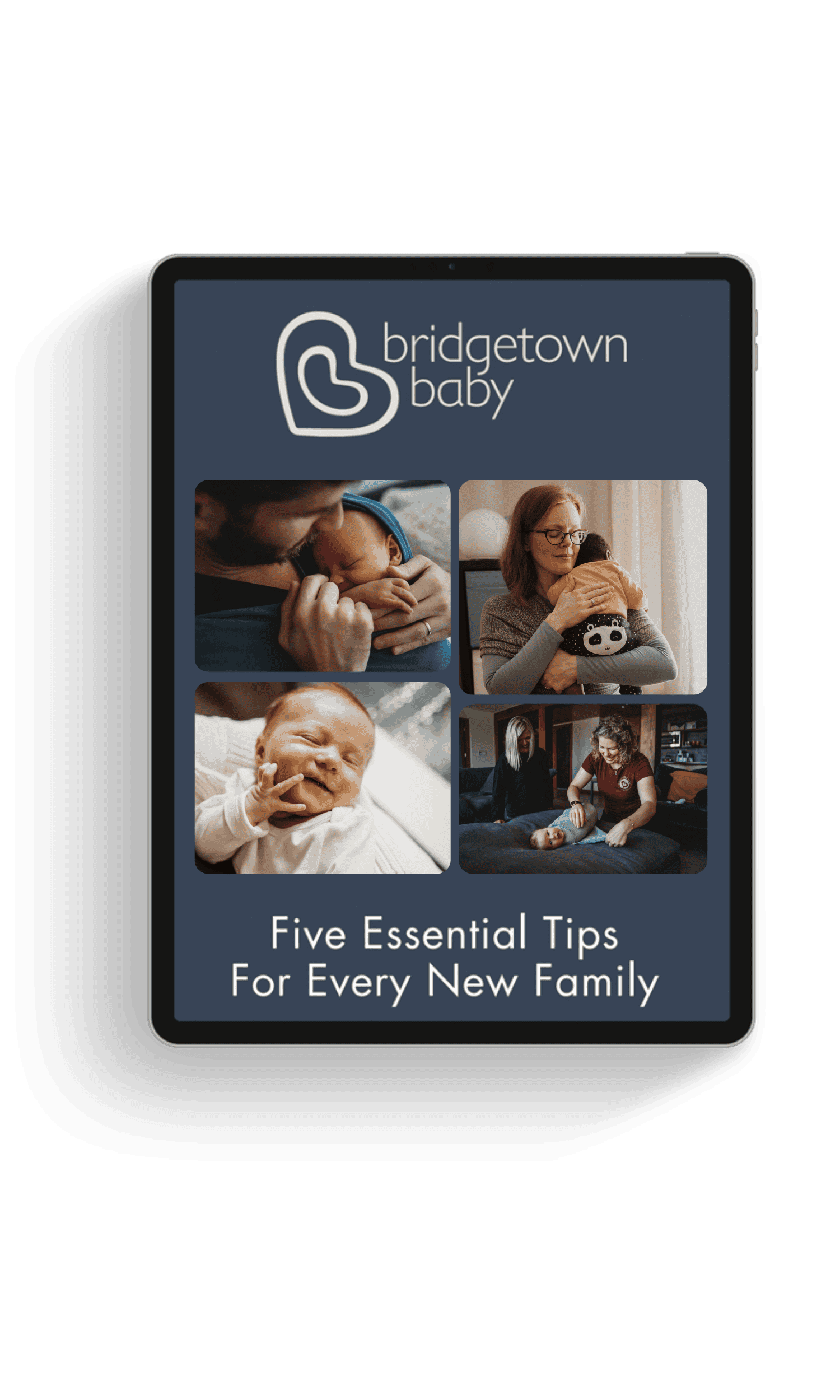
Five Essential Tips for New Parents
We created this guide to help parents simplify their to-do list around preparing for the fourth trimester, because we believe that a supported, restful postpartum experience brings lifelong benefits to parents and their children.
Information provided in the blog is for educational purposes only and does not substitute for professional medical advice. For more information, please see our disclaimer.
Krystle Gard is a certified postpartum doula, intimacy-in-the-fourth-trimester coach, and educator based in Portland, Oregon. With over 10 years of experience supporting families during the transformative postpartum period, Krystle offers compassionate, hands-on assistance to parents navigating the early days of parenthood. She specializes in helping families foster connection and emotional and physical closeness during the fourth trimester and beyond, guiding them through this tender time with empathy, presence, and deep respect. As a mother of three, including twins, and a proud surrogate, Krystle brings personal insight and a heartfelt commitment to supporting families of all shapes and sizes. Her background in chemical engineering complements her intuitive, organized approach to postpartum care. When not working, Krystle enjoys outdoor adventures with her family.